How old does a motorcycle have to be to be tax and MOT exempt?
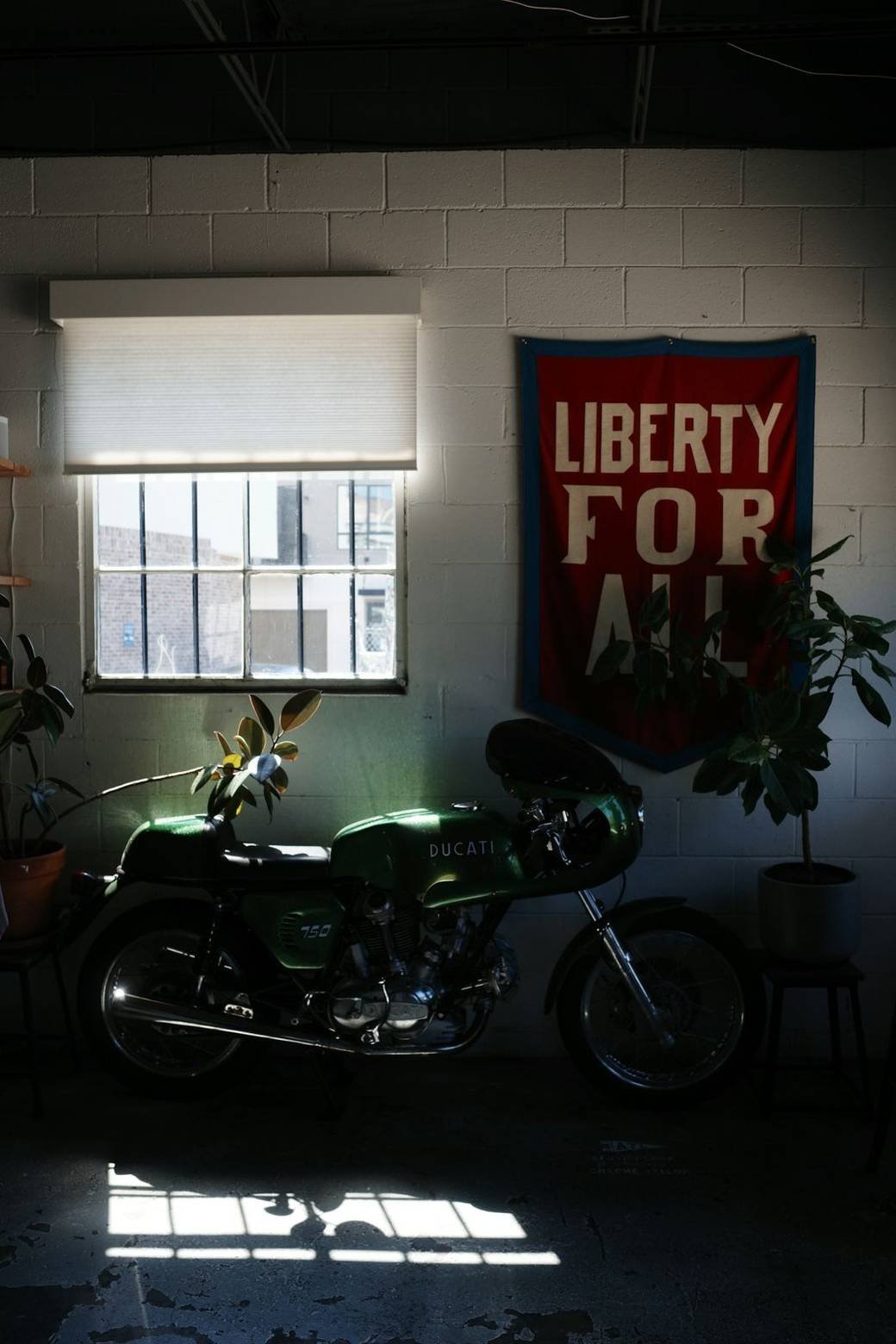
A motorcycle has to have been built before 1 January 1986 to be tax exempt: GOV.UK says that if your vehicle was built before that date "you can stop paying vehicle tax from 1 April 2026". For the MOT the test is different: no MOT is needed if the bike "was built or first registered more than 40 years ago" and has had no substantial changes. So the answer is 40 years for both, counted in two different ways.
- Vehicle tax: built before 1 January 1986, exempt from 1 April 2026. The date moves on one year every 1 April.
- MOT: exempt from the day the bike is 40 years old, if it has no substantial changes.
- Neither is automatic for tax: you apply, and you still tax the bike every year at £0.
- An imported bike needs a UK registration and a V5C in your name before you can apply.
- Import VAT has its own age rule (30 years), which is separate.
Bringing in a bike that old from abroad? We handle customs, NOVA and the DVLA forms, so it gets a UK registration first.
Get my bike registered
How old does a motorcycle have to be to be tax exempt?
Forty years, measured from 1 January. The law says a vehicle is exempt for the 12 months from 1 April in any year "if it was constructed more than 40 years before 1 January in that year" (Vehicle Excise and Registration Act 1994, Schedule 2, paragraph 1A). For the tax year that began on 1 April 2026 that means built before 1 January 1986. On 1 April 2027 it becomes built before 1 January 1987.
GOV.UK adds a fallback for bikes with no known build date: "if you do not know when your vehicle was built, but it was registered before 8 January 1986, you do not need to pay vehicle tax from 1 April 2026". Motorcycles and tricycles are both on the list of eligible vehicles. A bike used "for hire or reward" or "commercially for a trade or business" does not qualify.
How old does a motorcycle have to be to be MOT exempt?
Forty years, measured from the bike's own date. GOV.UK says you do not need an MOT if "the vehicle was built or first registered more than 40 years ago" and "no 'substantial changes' have been made to the vehicle - for example, replacing the chassis, body, axles or engine to change the way the vehicle works".
There is no 1 April in this rule. A bike built in June 1986 stopped needing an MOT in June 2026. You do not apply for it, but you declare it: form V112 is the evidence of MOT exemption you show when you tax the bike. The bike still has to be roadworthy, and GOV.UK warns you can be fined up to £2,500 and get 3 penalty points for using a vehicle in a dangerous condition.
Tax exempt and MOT exempt: which years qualify today?
Because the two rules count differently, a bike can be free of one and not the other. This table is worked out for 29 November 2026.
| Year the bike was built | Vehicle tax | MOT (no substantial changes) |
|---|---|---|
| 1985 or earlier | Exempt now | Exempt now |
| January to November 1986 | Pays until 1 April 2027 | Exempt now |
| December 1986 | Pays until 1 April 2027 | Exempt from its 40th anniversary |
| 1987 | Pays until 1 April 2028 | Exempt during 2027, on its 40th anniversary |
The middle rows are the ones people miss. A 1986 bike can ride without an MOT today and still owes vehicle tax for a few more months.
An imported bike has to be registered with the DVLA before anyone can put it in the historic tax class. Send us the foreign papers and we tell you what the DVLA will accept as proof of its age.
Is an imported motorcycle tax and MOT exempt?
The rules look at when the bike was built, not where it has lived, so an import can qualify. But an import starts with no UK record at all, and the exemption is applied through the UK log book. First comes the import itself: customs declaration with VAT and duty paid, the NOVA within 14 days of arrival, then the DVLA application with form V55/5 and the £55 first registration fee. Our guide to registering an imported motorbike has the full list.
Two things matter for an old bike at that stage. The DVLA asks for "the original foreign registration certificate to show when the vehicle was manufactured", and the build date it records is the date both exemptions hang on. If the foreign papers are missing or show only a registration date, read our guide on proof of age and Q plates before you apply, because a bike with no proven age cannot be dated as historic. And an imported bike over 40 years old with no substantial changes does not need a UK MOT to be registered, while a younger one over 3 years old does.
How do you claim the tax exemption?
At a Post Office that deals with vehicle tax. GOV.UK lists what to take: "the log book (V5C) in your name", your vehicle tax reminder letter if you have one, and either evidence of a current MOT or the V112 if the bike is MOT exempt. The Post Office sends the log book to the DVLA, which returns an updated one showing the historic tax class.
After that you still tax the bike every year. GOV.UK is blunt about it: "you must tax your vehicle even if you do not have to pay", and "you can be fined £80 if you do not tax your vehicle on time".
What counts as a substantial change on a motorcycle?
GOV.UK gives the examples of "replacing the chassis, body, axles or engine to change the way the vehicle works", and points to its fuller guidance for anything borderline. If you are not sure, it tells you to read that guidance or "speak to a historic vehicle expert". We do not judge that for you: it is a question about the bike, not about the import paperwork. What we can say is that it matters before you buy. A heavily rebuilt bike may lose the MOT exemption, and a bike built from parts raises its own registration questions, covered in our classic motorcycle import guide.
Does the 30 year rule for import VAT follow the same dates?
No. That is a customs rule with its own test. A motorcycle over 30 years old may be charged 5% import VAT and no duty instead of the normal rates, but only if it meets three conditions, and age is just one of them. A bike can be old enough for the tax class and still pay the full import rates, or the other way round. The conditions and a worked example are in the classic motorcycle import guide, and the normal rates are in our guide to motorcycle import duty and VAT.
What we do for you
We handle the import side of an old bike: the customs declaration, working out and paying the duty and VAT, the NOVA, and every DVLA form prepared for you to sign and post. If the bike needs a dating letter to prove its age, we obtain it. We do not test, modify or tax bikes, and the Post Office step for the historic tax class is yours once the V5C arrives.
Quick answers
Is a 1986 motorcycle tax exempt?
Not yet. It becomes exempt on 1 April 2027, when the cut-off moves to bikes built before 1 January 1987.
Is a 1986 motorcycle MOT exempt?
Yes from the day it is 40 years old, if no substantial changes have been made to it.
Do I still have to tax a tax exempt motorcycle?
Yes. GOV.UK says you must tax your vehicle even if you do not have to pay.
Can I claim the exemption before the imported bike is registered?
No. GOV.UK asks for the V5C in your name, and an import only gets a V5C once the DVLA has registered it.
How long does the V5C take for an imported bike?
GOV.UK says the registration certificate can take up to 6 weeks to arrive.
Official sources, checked on 29 November 2026: gov.uk/historic-vehicles · legislation.gov.uk/ukpga/1994/22/schedule/2/paragraph/1A · gov.uk/vehicle-exempt-from-vehicle-tax · gov.uk/importing-vehicles-into-the-uk/registering-an-imported-vehicle · gov.uk/importing-vehicles-into-the-uk